Verne Field Notes · Engineering journal
Field notes from the engineering floor.
How we build AI and software inside real operations: what works, what fails, and the evidence behind each claim.
Test bench · Growth engineering
Your ad platform counts clicks. Your business needs leads.
We sent eight scripted enquiries through a test form. The server stored 4 leads. A tag on the Send button counted 7. Count the lead instead, with one event that fires after your server confirms it.
Read the note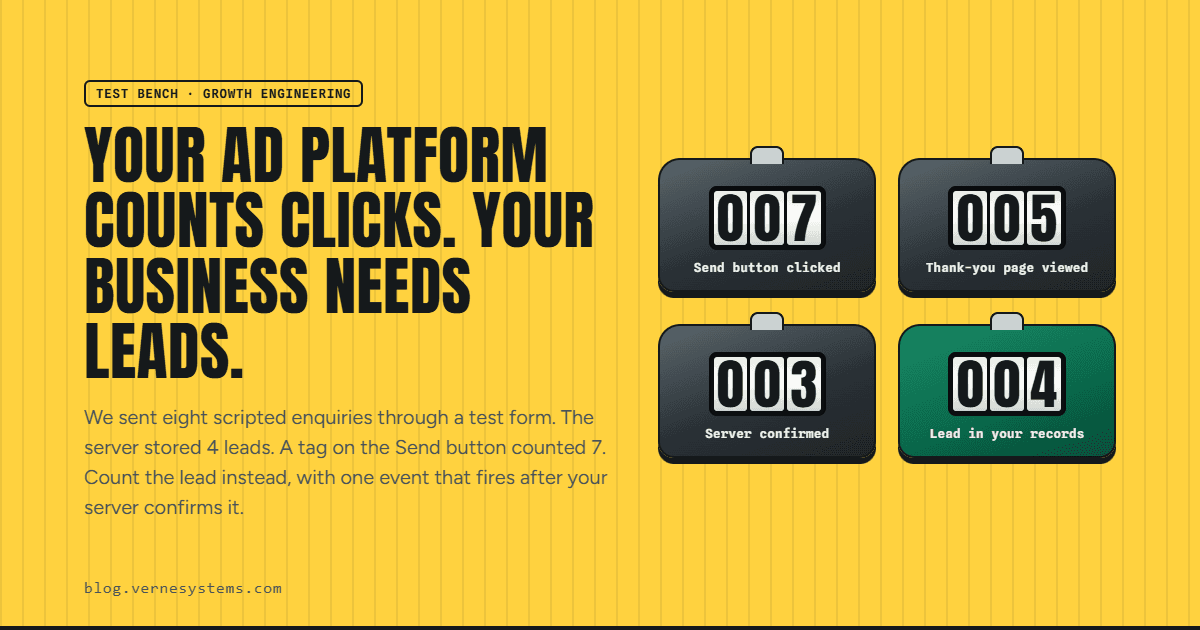
Archive
More notes
10 notes
Product and brand design
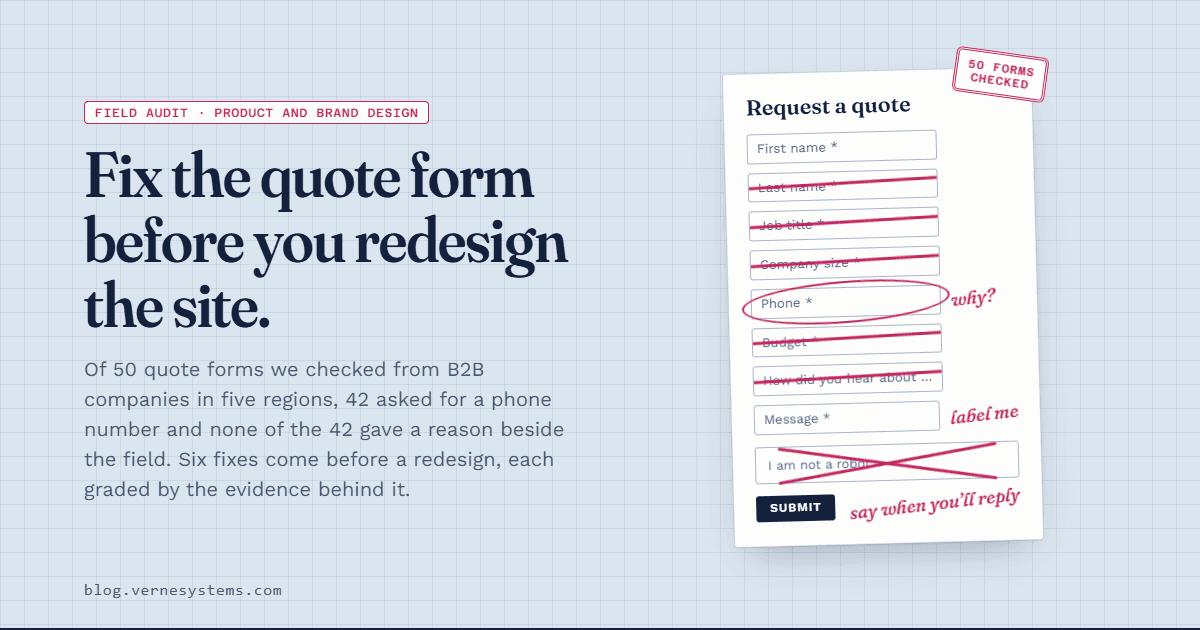
Fix the quote form before you redesign the site.
Of 50 quote forms we checked from B2B companies in five regions, 42 asked for a phone number and none of the 42 gave a reason beside the field. Six fixes come before a redesign, each graded by the evidence behind it.
Forward-deployed engineering
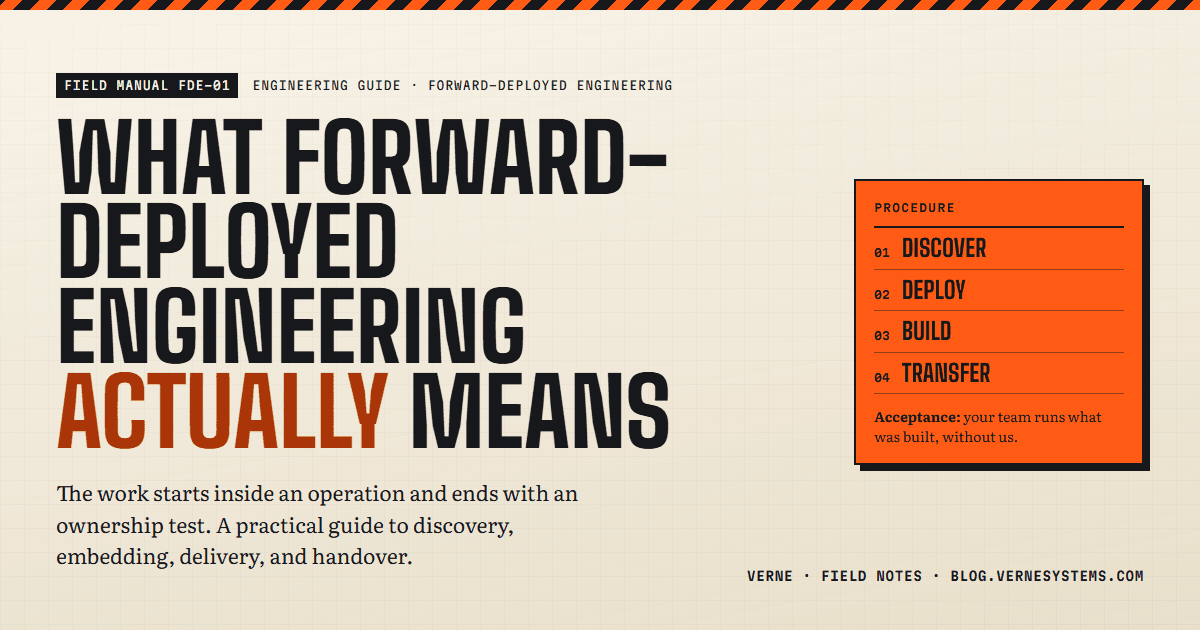
What forward-deployed engineering actually means
The work starts inside an operation and ends with an ownership test. A practical guide to discovery, embedding, delivery, and handover.
Forward-deployed engineering
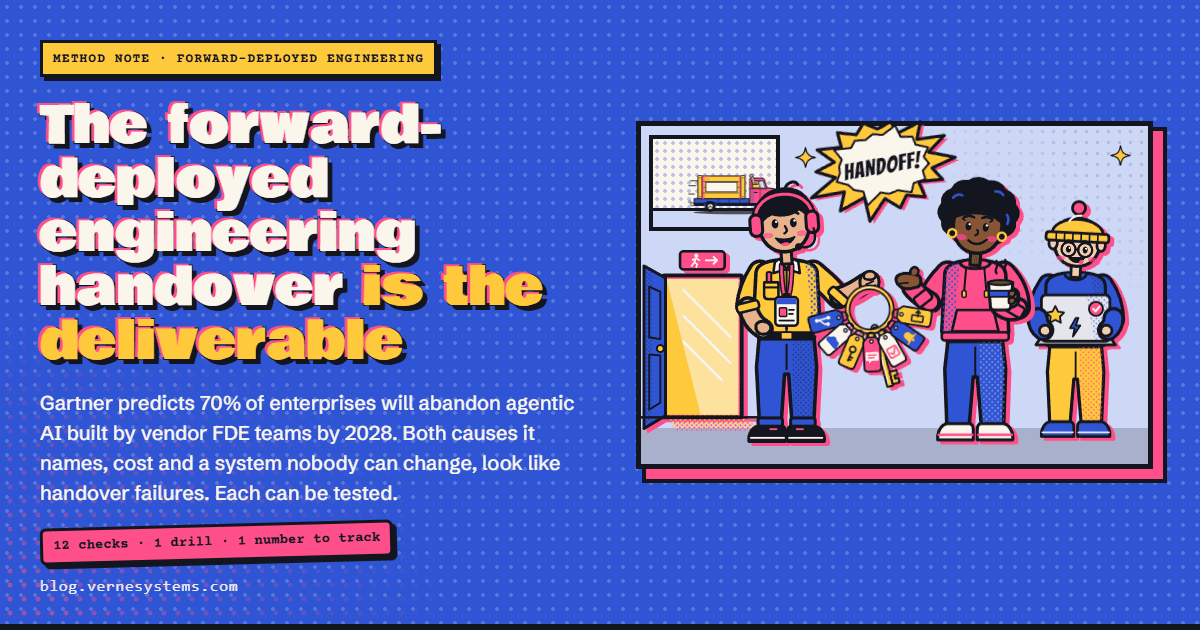
The forward-deployed engineering handover is the deliverable
Gartner predicts 70% of enterprises will abandon agentic AI built by vendor FDE teams by 2028. Both causes it names, cost and a system nobody can change, look like handover failures. Each can be tested.
Agent governance
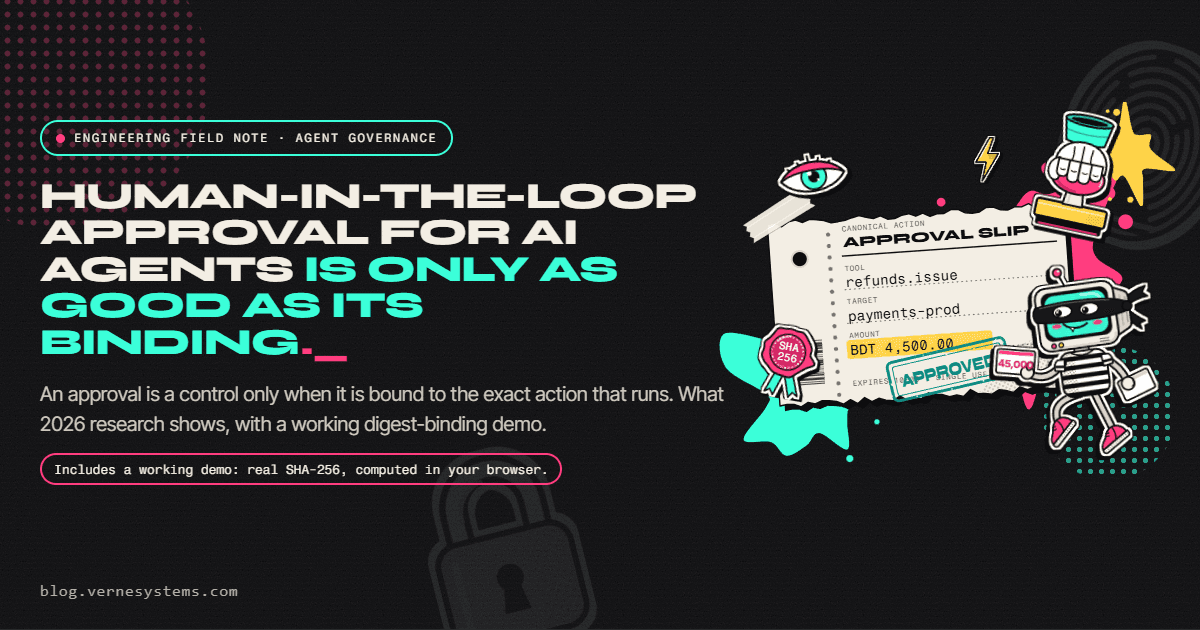
Human-in-the-loop approval for AI agents is only as good as its binding
An approval is a control only when it is bound to the exact action that runs. What 2026 research shows, with a working digest-binding demo.

Decision models
Jev calibration, tested on 1,232 banking support messages
On 1,232 support messages, Jev's 1.0 answers were 97.5% right and its 0.6 to 0.7 answers 44%. One temperature fit on 50 labels cut the error by a third.
AI evaluation
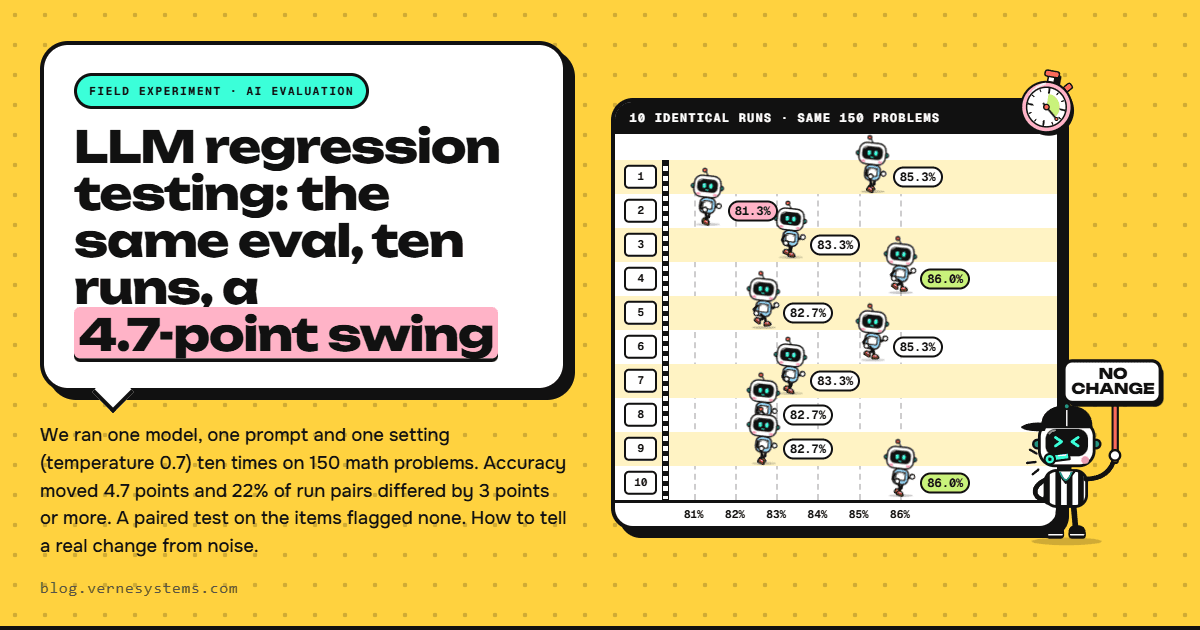
LLM regression testing: the same eval, ten runs, a 4.7-point swing
We ran one model, one prompt and one setting (temperature 0.7) ten times on 150 math problems. Accuracy moved 4.7 points and 22% of run pairs differed by 3 points or more. A paired test on the items flagged none. How to tell a real change from noise.
Product engineering
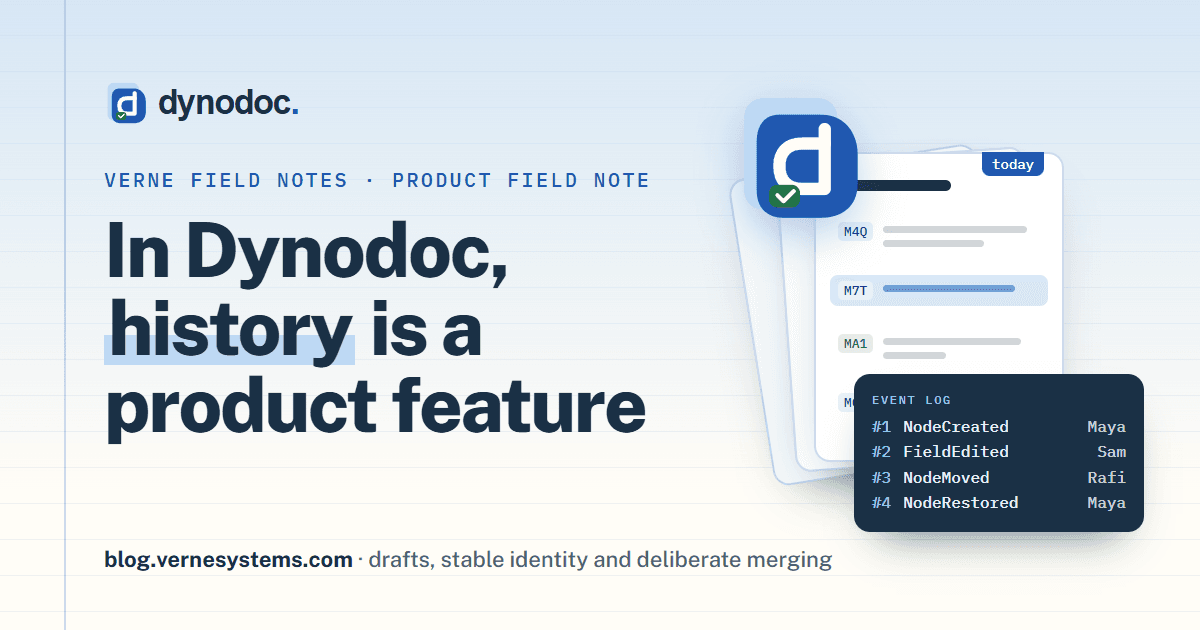
In Dynodoc, history is a product feature
Why personal drafts, stable identity, and deliberate merging belong in a document workspace. What Dynodoc implements today, and where the limits remain.
Retrieval systems
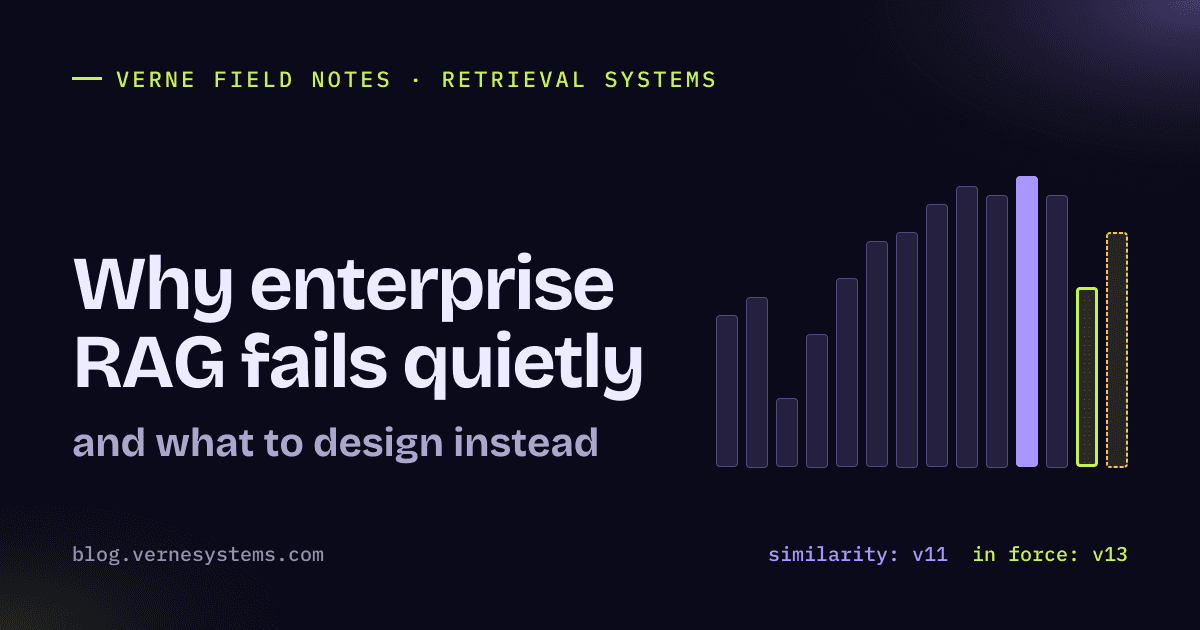
Why enterprise RAG fails quietly, and what to design instead
Bigger context windows did not fix it. The failures sit in versions, permissions and evaluation, and the research from 2024 to 2026 shows where each fix belongs.
Compliance automation
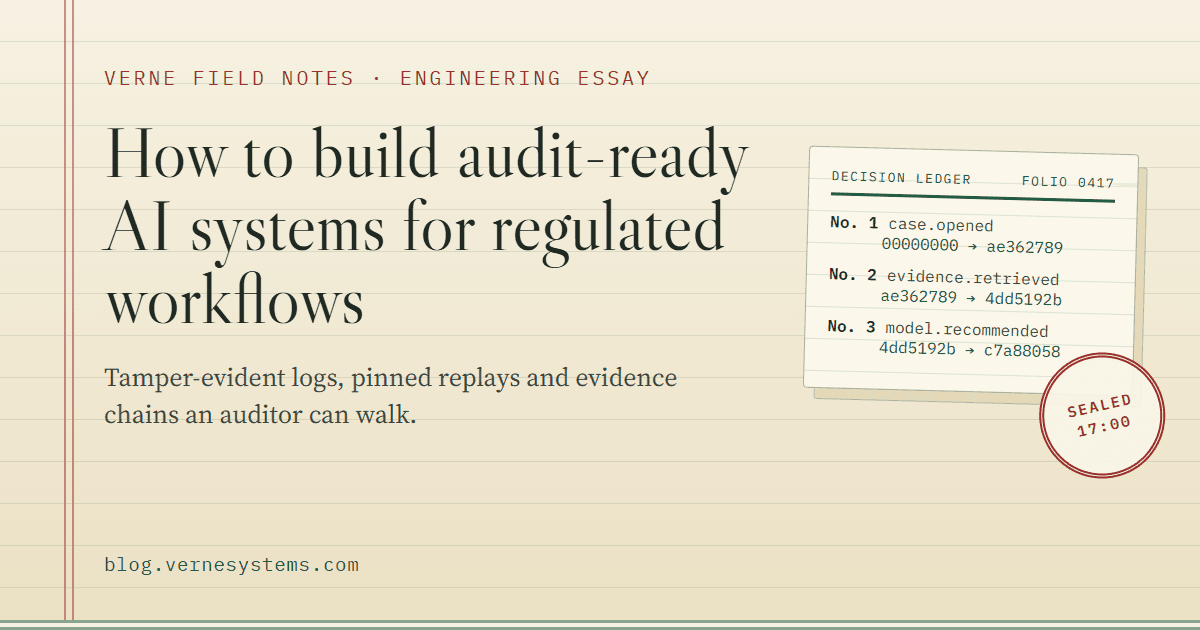
How to build audit-ready AI systems for regulated workflows
Tamper-evident logs, pinned replays, evidence chains, and the evidence contract you agree with your auditor before launch. Revised for the EU AI Act's new high-risk dates.
Human-in-the-loop
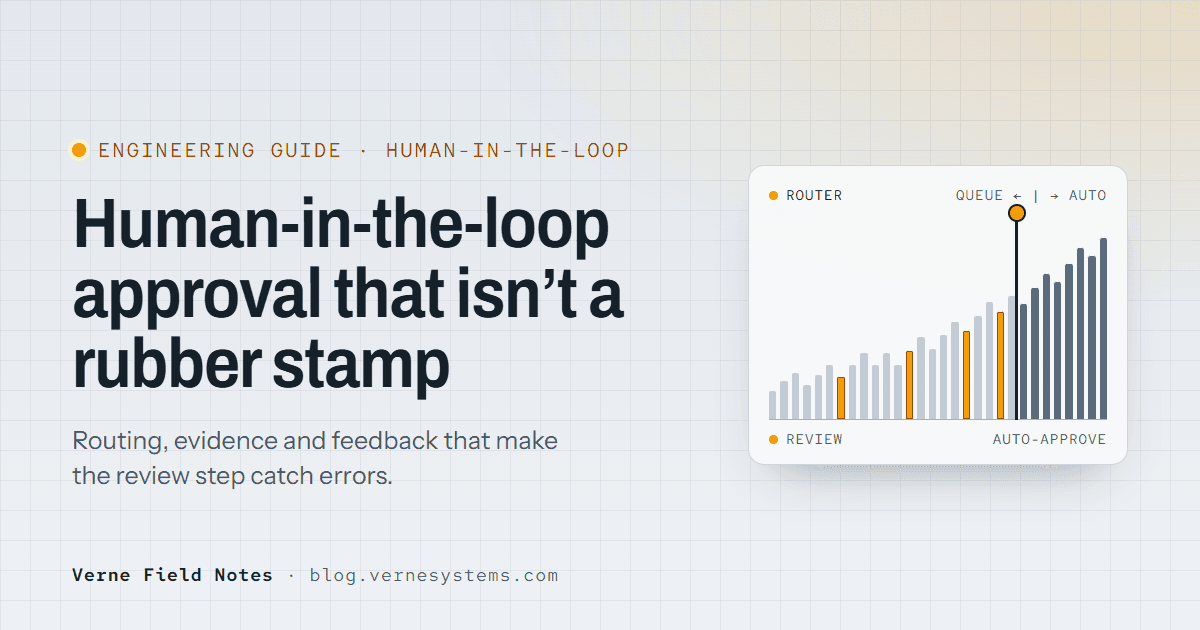
Human-in-the-loop approval that isn’t a rubber stamp
Putting a person between an AI system and its actions does not make it safe on its own. What the research on automation bias shows, and how to design routing, evidence and feedback so the review step catches errors.
How we write
Evidence first, then opinion.
Cited, claim by claim
Every outside claim links to a numbered source. Hover a citation in any note to preview it before you jump.
Illustrations say so
When a note uses an invented scenario or a simulation, it says so at the top. No borrowed client logos, no unmeasured numbers.
Written by the builders
The engineers who design and ship these systems write the notes, including the limits and what they would do differently.
Follow along
New notes, without the noise.
Add the feed to any RSS reader to get each note when it publishes, or follow Verne on LinkedIn.
Working on something similar?
Talk to the engineers who wrote these.
We embed with your team, build the system inside your operation, and hand it over when your people can run it.
Book a strategy call